What is furoshiki? The Japanese wrapping cloth
A furoshiki is a square of cloth, and that is nearly all it is. Knot the corners one way and it is a bag. Knot them another and it wraps whatever shape you hand it. Untie it and it is a flat piece of fabric again, easy to put away.
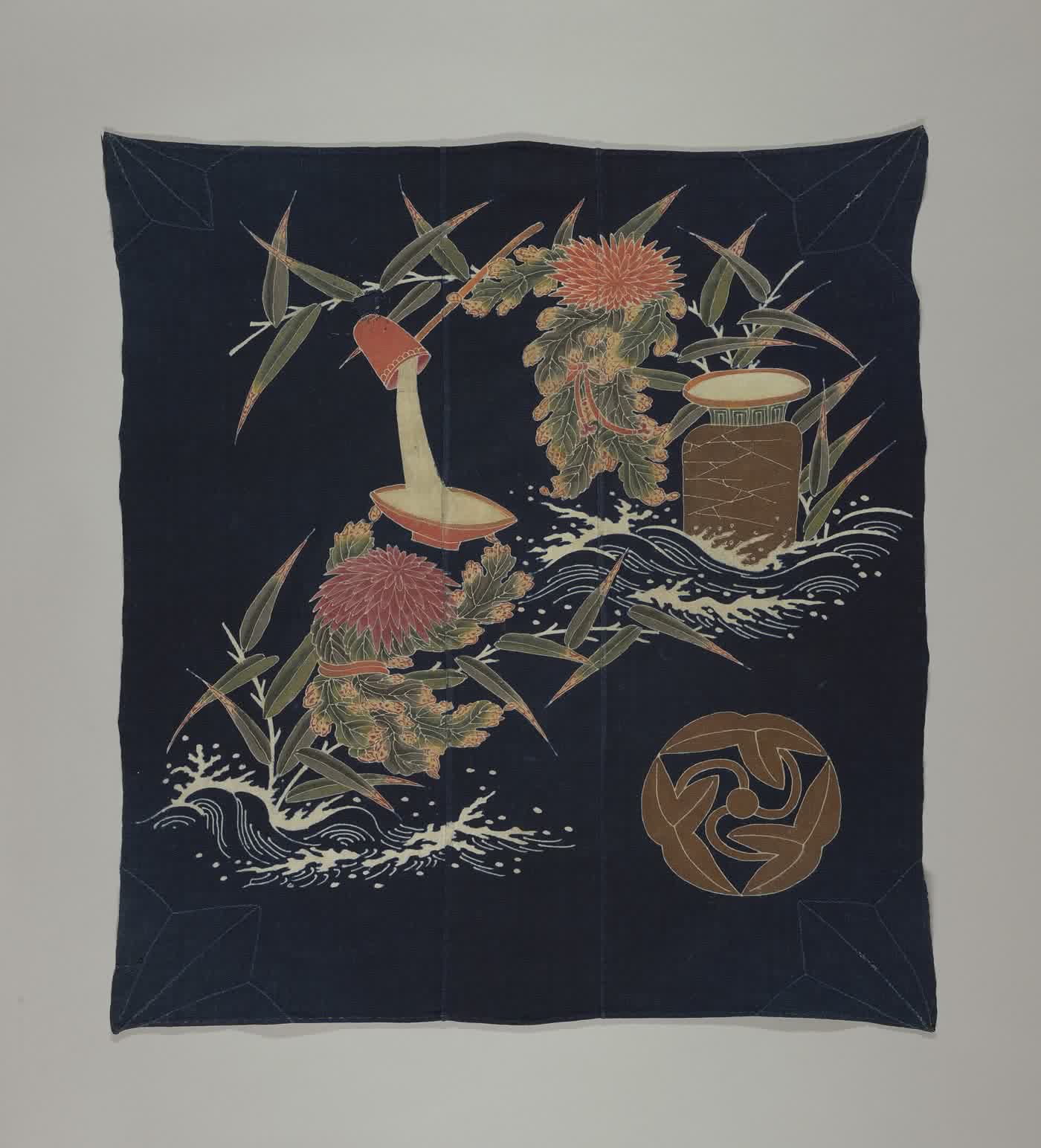
Textile: unknown artist; Cooper Hewitt, Smithsonian Design Museum, Public Domain Mark 1.0, via Wikimedia Commons. File page and licence

One cloth, many shapes
Most bags decide in advance what will fit inside them. A furoshiki works the other way round: the cloth takes the shape of the thing it carries.
Japan's Ministry of the Environment describes it as a traditional wrapping cloth that can wrap and carry items of many different shapes, and shows how to tie one into a reusable grocery bag. There are no fixed rules for the knots. The same square can become a handbag or a drawstring-style bag, and when the errand is done it comes undone.
Older than its name
People in Japan were wrapping things in cloth more than 1,300 years ago. In the Nara period, fabric was used to wrap valuables.
Nobody called it furoshiki then. The word did not exist yet, and an earlier name for such a cloth was tsutsumi.
Where the name comes from
No one has settled this. Accounts agree only that there are several theories.
The best-known story leads to the public bathhouse: bathers carried a cloth with them and spread it on the floor to stand on while they changed. One account dates the cloth's broad use to the 16th century, when public bathhouses appeared. Another says the cloths took the general name furoshiki around the middle of the Edo period. Those are different milestones, not competing dates.
From merchants to gifts
The cloth did not stay at the bathhouse. Merchants and traders used furoshiki to carry and deliver their goods. It also became part of how gifts are given in Japan, where a present can arrive wrapped in one.
Why it lasted
What made the cloth useful to a trader still holds: it can be used again and again. A wrap, a shopping bag and a gift covering can all start as the same square.
We share interesting things from around the world. We have not tested them.
Where it is used
Japan.
Sources
- Japan Ministry of the Environment
- Nippon.com
- Japan Foundation, Sydney
- Kansei Engineering International Journal
- Japan Creative Centre, Embassy of Japan in Singapore
- IHCSA Café
- Kikkoman