What is a molcajete? The stone bowl behind Mexican salsa
A molcajete is the Mexican mortar: a bowl of rough volcanic stone standing on three short legs. It comes with a stone hand tool called a tejolote, and the two are used together to crush chiles, garlic, tomatoes and spices into salsas and guacamole.
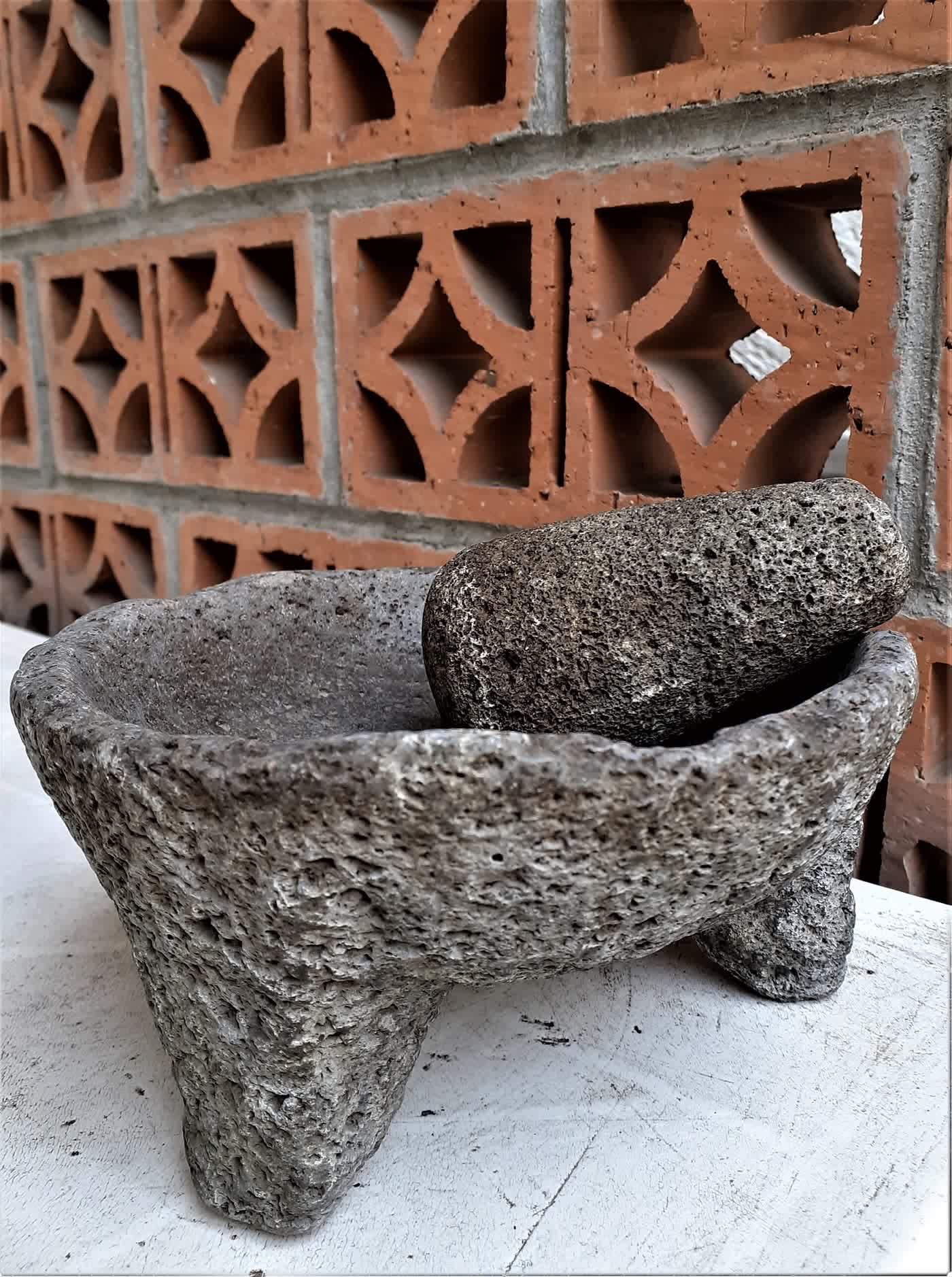
Photo: Eduardo Ruiz Mondragón, CC BY-SA 4.0, via Wikimedia Commons (cropped and resized). This image is shared under the same licence. File page and licence

One block of stone
A traditional molcajete is carved from a single block of volcanic stone, usually basalt. The stone is porous, and the Museo Amparo in Puebla says that is what gives sauces made in it their particular texture. The tejolote always goes with it; the museum notes that it invariably accompanies the bowl.
A bowl for sauce
Both names come from Nahuatl, the language of the Aztecs. Molcajete is usually traced to molcaxitl, from molli, sauce, and caxitl, bowl. Sources give slightly different forms of the original word, and they differ on tejolote as well; the Museo Amparo derives it from words meaning stone and to crush.
The tool is older than the Spanish conquest and was used by the Aztecs and the Maya. How much older is not settled. One Mexican magazine says the molcajete has been known for about a thousand years. Another publication says examples about 7,000 years old have been found, without saying where.
Curing a new one
A new molcajete sheds grit, so it has to be cured before it is used for food. One method starts with a soak of about 20 minutes and a scrub with a stiff brush. Then something dry and hard, commonly uncooked white rice, is ground in the bowl again and again, and the stone is rinsed until the water runs clear. One sign that the job is done: the rice comes out as flour with no visible grains of stone in it.
What it is for
Salsas and guacamole are the classic jobs, along with grinding whole spices such as cumin seeds and peppercorns. A salsa described as molcajeteada is simply one that was made this way.
It is not the same tool as the metate, the flat grinding stone used for maize and cacao. The molcajete is a mortar and a mixing bowl in one, and it often goes straight to the table as the serving dish.
Looking after it, and spotting a fake
Food references say to wash a molcajete with water only, because the porous stone can absorb soap.
Not everything sold as a molcajete is carved stone. Imitations are made from concrete mixed with crushed stone, and some are painted to look like lava. One reference says those are best kept for display.
Still on the table
One food reference says most Mexicans now use a blender instead. The Museo Amparo calls the molcajete and the metate emblems of the Mexican kitchen, and a heritage at risk because electric appliances have taken their place.
We share interesting things from around the world. We have not tested them.
Where it is used
Mexico and Central America.
Sources
- Museo Amparo, Molcajete figurativo con su tejolote (catalogue entry)
- México Desconocido, El molcajete, herencia mexicana
- Pitt Rivers Museum, University of Oxford (metates)
- CooksInfo, Molcajete y tejolote
- Matador Network, Molcajete y metate, indispensables de la cocina mexicana
- La Razón (cultural column on the metate and molcajete)
- Wikipedia, Molcajete
- WebstaurantStore blog, What is a molcajete? (care and curing)